LUXURY CRUISING: THIS CHANGES EVERYTHING
The Moment Everything Changes & Why Your Room Matters More Than You Think
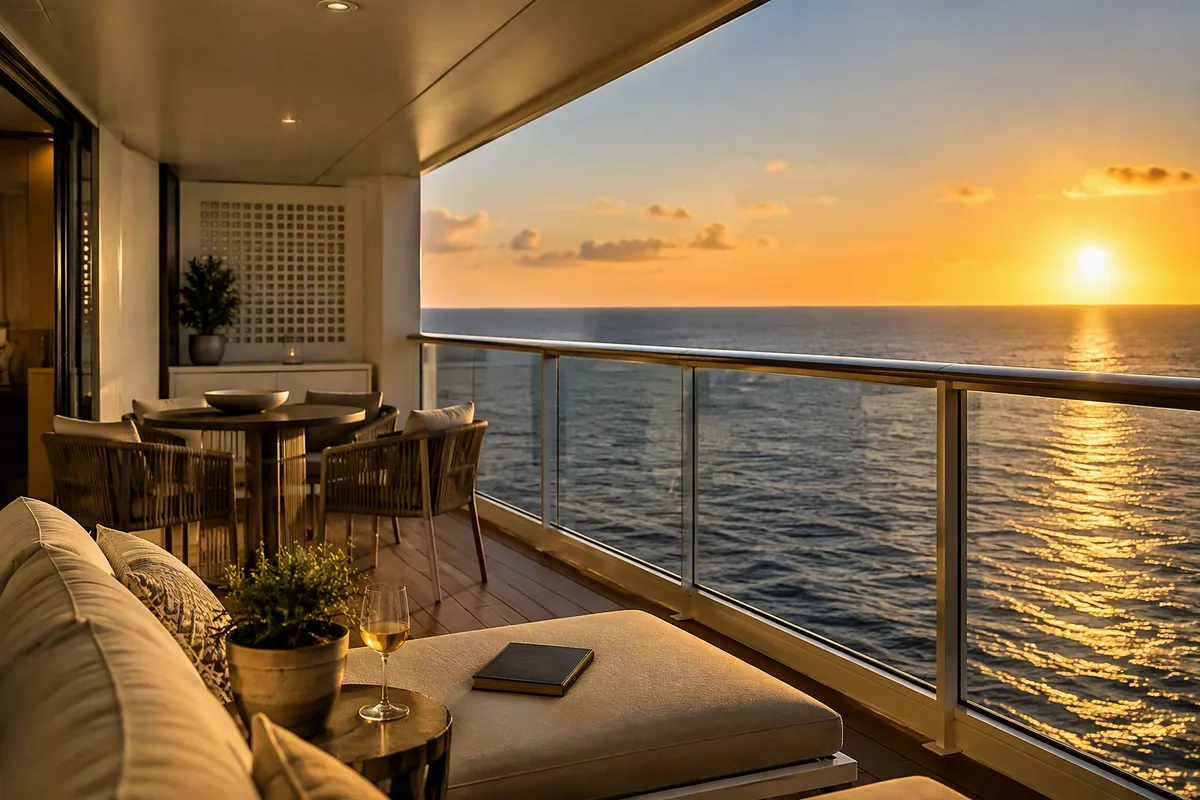
The moment you realize a luxury cruise will be different doesn’t happen when you step on the ship. It happens long before that—quietly, subtly, almost like a soft overture to the experience that’s about to unfold. It begins with an email. Not a generic confirmation, or a reminder to download the app, but a personal message from your concierge. It begins with your personalized luggage tag arriving in the mail, not sent in a download. It begins with a real human being reaching out to ask about your preferences, your routines, your celebrations, your quirks, your comforts. They want to know your preferred cabin temperature, still or sparkling water, cold or room temperature. If you have a favorite wine. If you’re celebrating something meaningful. If you want breakfast on the balcony or in the dining room. It feels like someone is preparing for you, not for a passenger.
That’s the first signal.
The second comes on embarkation day. You arrive at the port expecting the usual chaos—the crowds, the lines, the noise, the luggage carts, the families juggling backpacks and boarding passes. But instead, you’re directed to a designated suite check‑in area. It’s quiet. Calm. Intentional. You drop your luggage in a specific zone, perhaps in a tent protected from the morning sun. Someone waits for you, greets you by name. You’re escorted past the crowds, past the noise, past the lines. On Royal Caribbean or MSC, this is the moment the ship‑within‑a‑ship experience begins. You’re guided through a private entrance, your room cards or bracelets handled for you, your path cleared as if someone choreographed your arrival.
On luxury lines—Oceania, Azamara, Silversea, Regent, Explora—the contrast is even more striking. There are no masses of people. No bottlenecks. No loud announcements. Your check-in feels more like the lobby of a luxury hotel. Soft lighting. Comfortable seating. Staff who move with quiet confidence. Check-in takes minutes, not hours. Travel documents are checked, and your suite key is handed to you with a smile.
You may be escorted to your room.
Not processed. Not funneled. Not herded.
The noise fades. The lighting softens. The air shifts. It’s not just what you see; feel it—that unmistakable moment when your nervous system says, I’ve arrived. You haven’t even reached your suite, and already the vacation has begun.
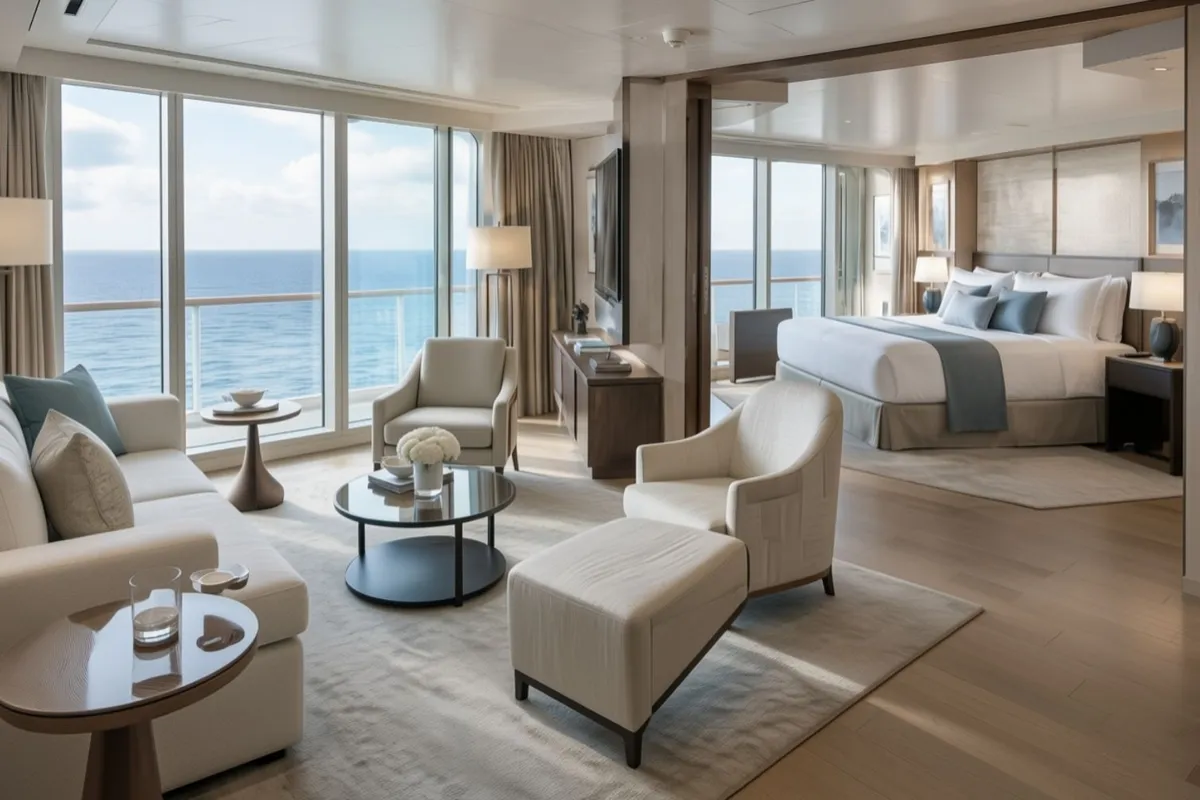
Your Stateroom
Most travelers think of their stateroom as a place to sleep, shower, and store luggage. But the truth is far more profound: your room is the emotional anchor of your entire cruise. It shapes how you move through the day, decompress, sleep, connect with the people you love, and how much mental energy you spend managing the vacation instead of experiencing it.
On most ships, standard cabins are tight. Even a balcony stateroom—which technically has natural light—compresses your movement. You feel it immediately: the choreography of two people trying to get ready at the same time, the steamy bathroom that never fully clears, the narrow balcony that feels more like a ledge than a retreat. Inside staterooms amplify the problem. No natural light. No sense of time. No visual horizon. Your nervous system stays in a low-grade state of alertness because the environment never signals “rest.”
Suites change that dynamic entirely.
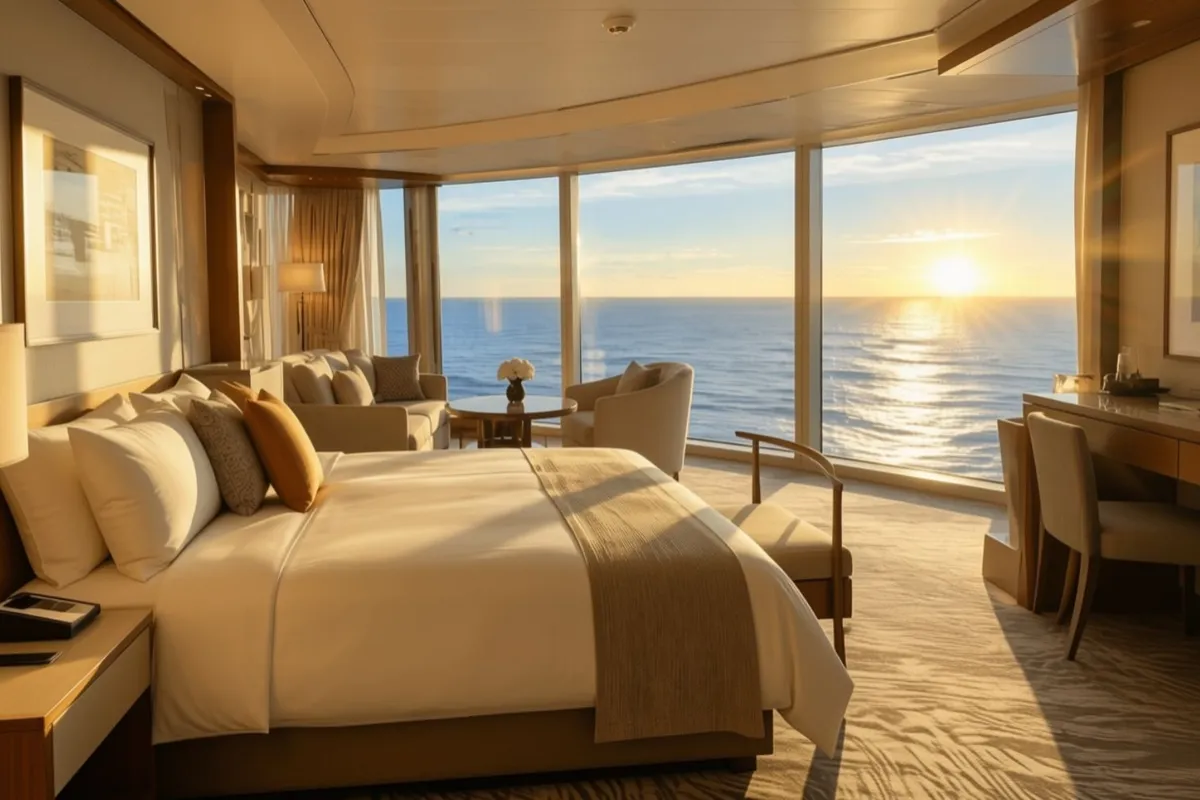
You walk into a space that feels open, bright, calm. Floor‑to‑ceiling windows flood the room with sunlight. The ocean stretches out in front of you like a private horizon; sometimes with a straight shot from the head of your bed. There’s a living area, a dining area, a bedroom that feels separate. The balcony is an outdoor room, not a narrow strip. The bathroom is a sanctuary, not a place to negotiate.
The moment you step inside, your shoulders drop, your breathing slows, your mind quiets.
This psychological shift defines suite life. One Explora guest described walking into her suite and taking “the first deep breath I’d taken in months.”
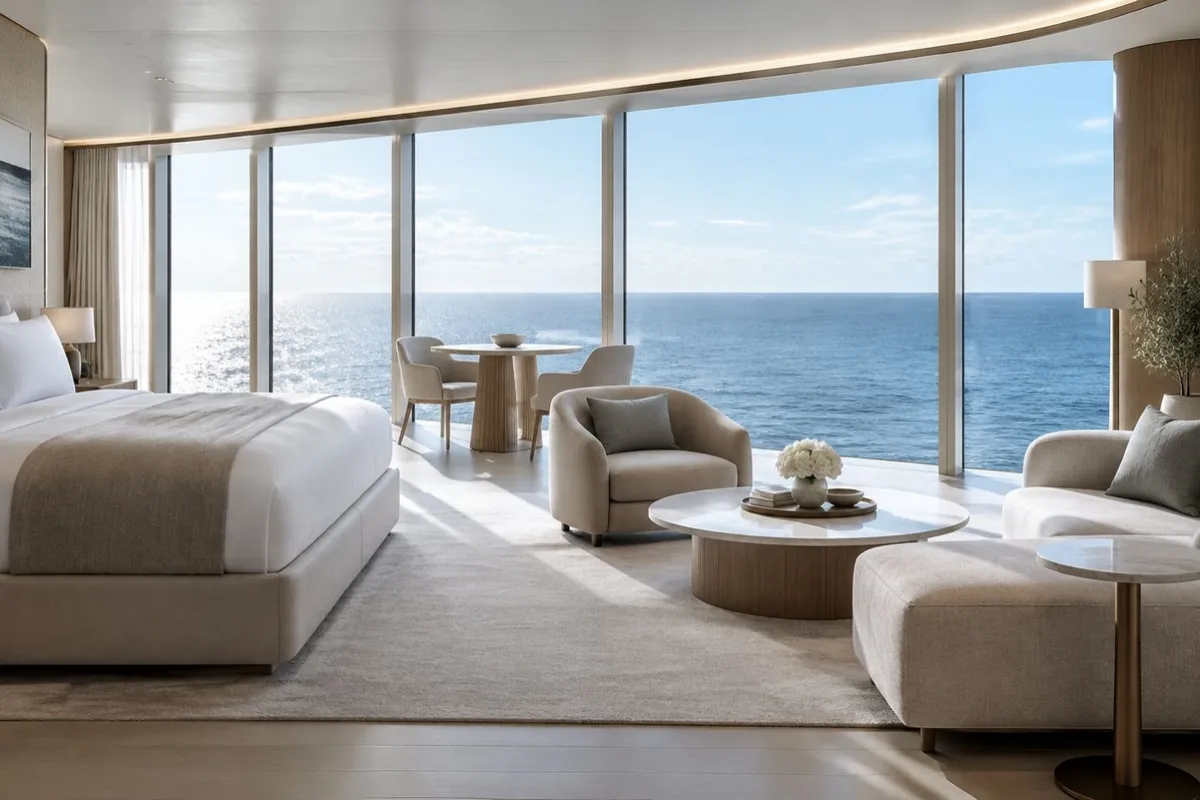
Light
Light is one of the most underestimated elements of cruising. Inside staterooms have none. Balcony staterooms have some, but it’s limited—filtered through a narrow sliding door, often partially blocked by furniture, and rarely expansive enough to create a sense of openness.
Suites transform the experience.
Floor‑to‑ceiling windows flood the room with sunlight. Panoramic views regulate your circadian rhythm. Natural light becomes part of the architecture of calm. You wake gently. You feel oriented. You feel connected to the ocean in a way that’s impossible in smaller rooms.
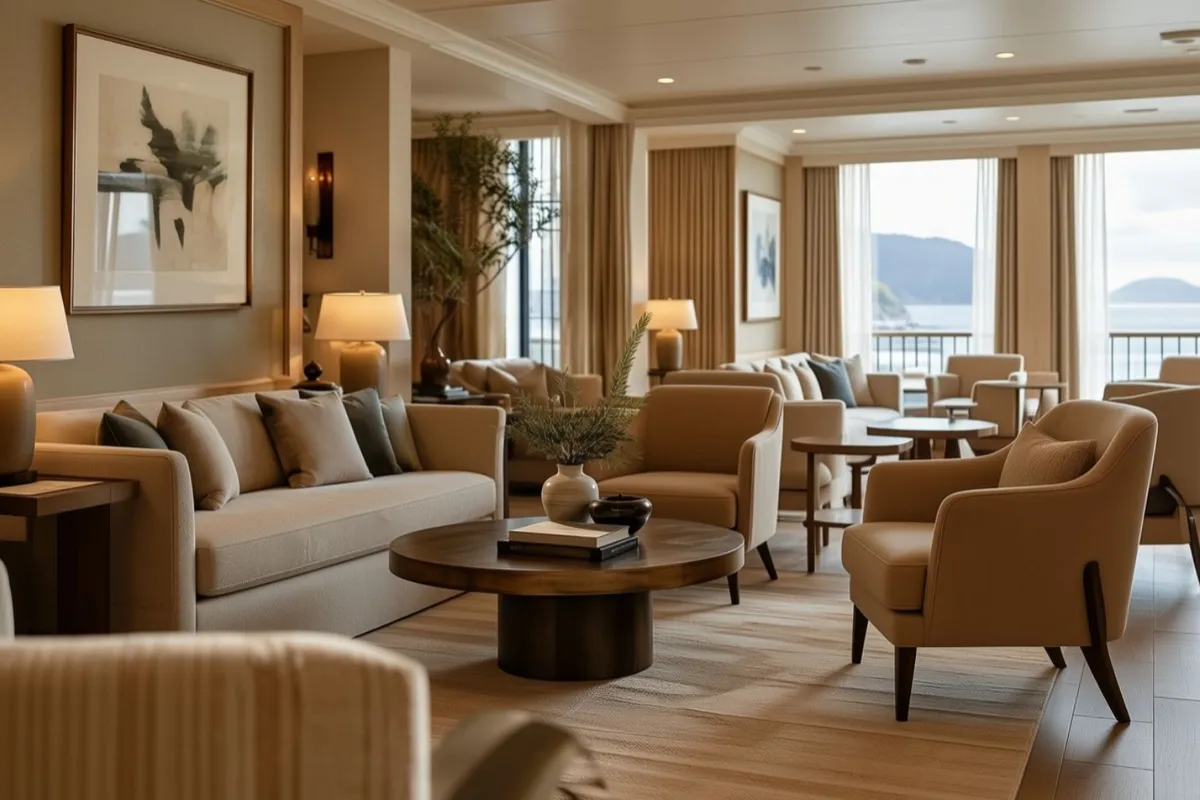
Calm
Crowded ships create constant sensory load—noise, lines, bottlenecks, bright lights, packed elevators. Even if you love the energy of a big ship, your nervous system absorbs the constant stimulation.
Suite enclaves create quiet zones. Luxury lines reduce passenger density. Dining rooms feel intimate. Lounges feel spacious. Pools feel serene.
A Seabourn guest shared that, at the end of the trip, they realized they hadn’t waited in a single line all week. “It felt like the entire itinerary was built around us,” they said.
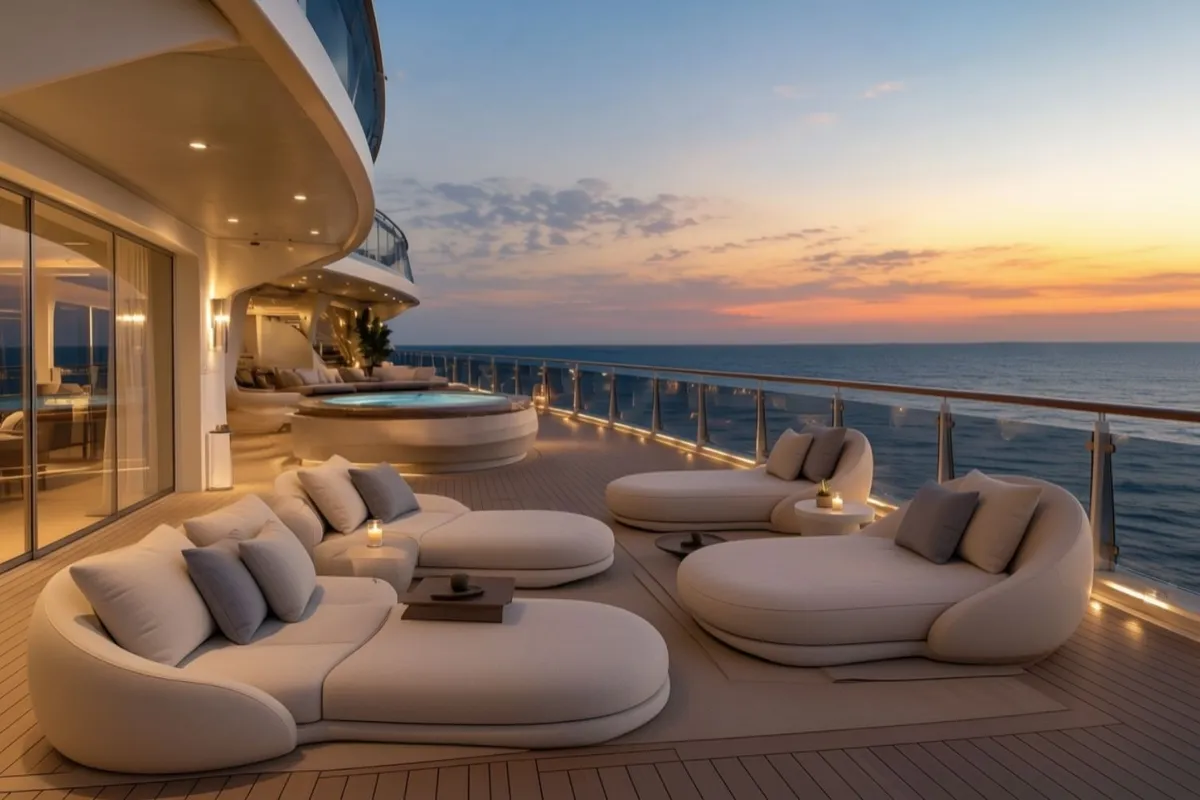
Ship‑Within‑a‑Ship: Contemporary & Premium Lines
On modern ships, stepping out of your suite doesn’t mean stepping into the full energy of the promenade. Instead, you enter a curated zone designed for calm. Different cruise lines execute this differently, each with its own personality and philosophy.
Royal Caribbean ships built after 2019 (Spectrum of the Seas) have a true ship‑within‑a‑ship concept. You have private sun decks, exclusive dining at Coastal Kitchen, and everything within one exclusive area. In the highest suites, Star Class. A Genie orchestrates your day so seamlessly that logistics disappear. The Genie becomes your invisible architect—anticipating your needs, granting priority elevator access, smoothing your schedule, and creating moments you didn’t even know to ask for.
The Retreat is quieter, more refined. A private lounge, a dedicated restaurant (Luminae), and a suite sundeck that feels like a boutique hotel at sea. The Retreat is designed for people who want calm without sacrificing modern luxury.
MSC — Yacht Club
MSC’s Yacht Club is one of the best value propositions in cruising. A fully enclosed luxury enclave with its own pool, restaurant, lounge, and butler service. It feels like a private club perched atop a bustling ship. Yacht Club is unique in that you can sail in any type of stateroom. Budget-sensitive yet luxury-seeking travelers can have an inside stateroom within the Yacht Club, which allows them to be in an exclusive area of the ship for less.
Norwegian — The Haven
Norwegian’s Haven blends modern design with privacy. It features a private courtyard, exclusive restaurant, dedicated lounge, and a quiet pool deck that feels worlds away from the main ship. A butler ensures all your needs are met, from arranging the right in-room amenities to escorting you to your priority tender.
Princess — Sanctuary & Suite Experience
Princess offers a more understated version of the enclave experience. The Sanctuary is serene, adults-only, and intentionally calm. Their suite program blends premium comfort with Princess’s signature relaxed luxury, creating a space that feels restorative rather than flashy.
These enclaves create an immediate contrast—a resort tucked inside a floating city. You step out of your suite and into a world designed for ease, not spectacle.
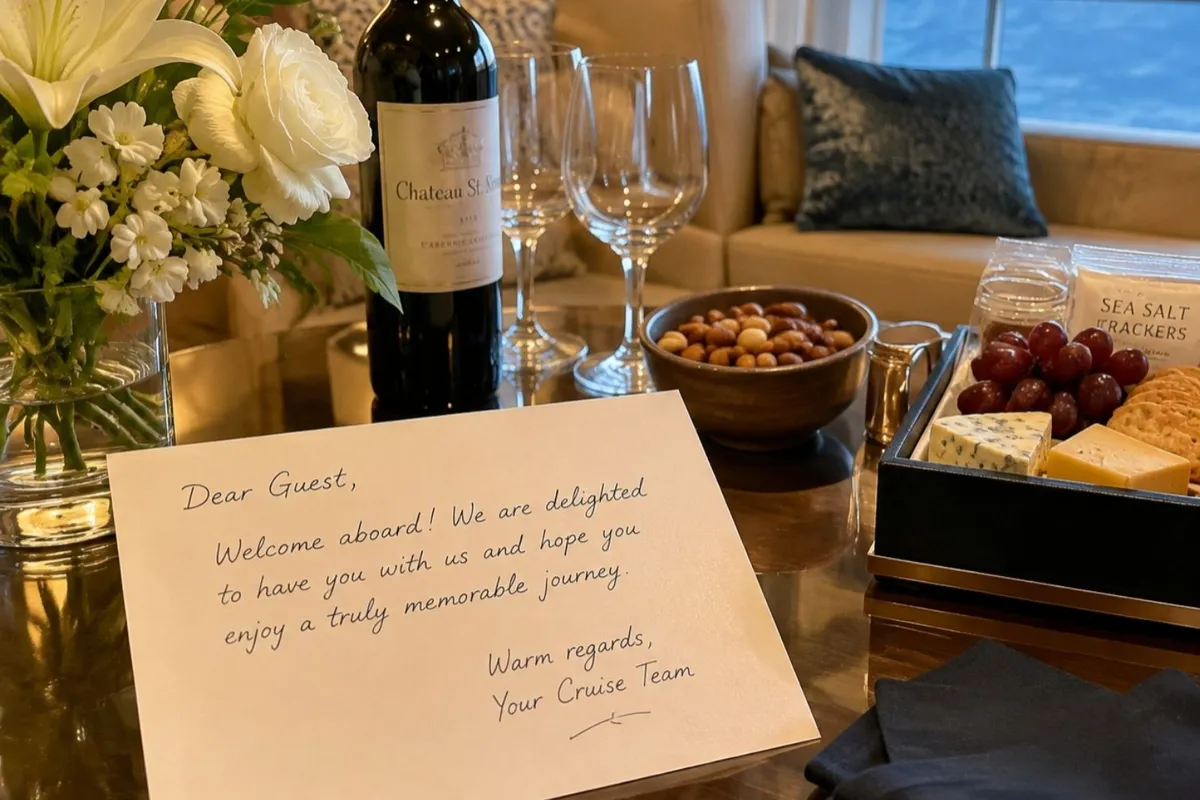
Service That Anticipates Instead of Reacts
Reactive service requires constant asking, managing, and negotiating. Anticipatory service removes friction.
A Genie who notices you always pause to photograph sunsets—and quietly shifts your dining so you’re seated at the perfect angle each evening.
A Retreat concierge who remembers your daughter’s favorite dessert mentioned on day one—and has it available for her every night.
A Yacht Club butler who realizes you prefer sparkling water at room temperature—and adjusts your minibar without you asking.
These moments aren’t accidents. They’re the architecture of luxury.
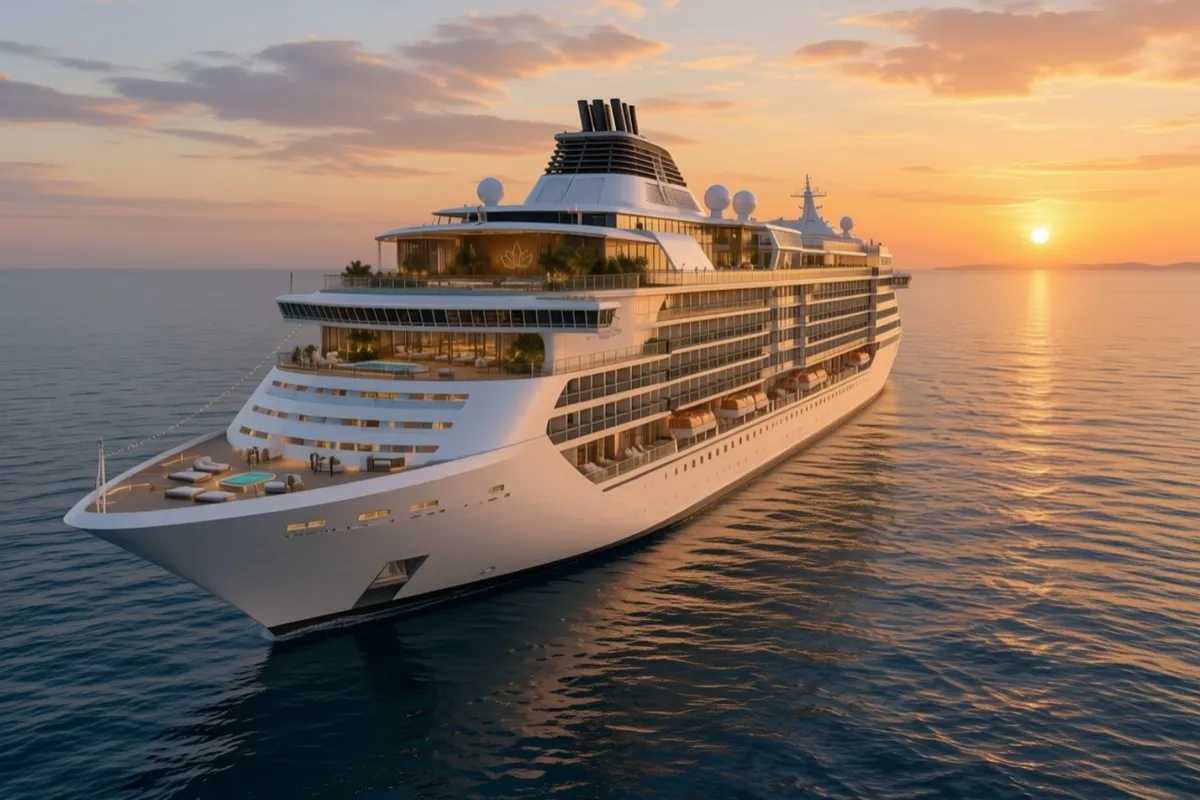
Luxury Lines: A Different World Entirely
Luxury lines aren’t ship‑within‑a‑ship. They’re ship‑as‑a‑sanctuary.
Each one has its own personality:
Silversea: Ultra-personalized service, small ships, and expedition options that feel intimate and deeply immersive. Signature champagne and caviar 24 hours a day. Silversea is intimate in a way that feels almost old‑world, but without the stiffness. The ships are small, elegant, and deeply personal. Crew members remember your name, your drink, your preferences, your rhythms. The service is attentive without being intrusive, and the atmosphere feels like a quiet conversation—warm, thoughtful, and unhurried. Silversea’s expedition itineraries add another layer of depth, blending luxury with adventure in a way that feels both grounded and elevated.
Regent Seven Seas: Regent is the most inclusive luxury line, and you feel that philosophy in every detail. The suites are spacious—truly spacious—with walk‑in closets, marble bathrooms, and balconies that feel like private verandas. The excursions are curated, not mass‑market. The dining is refined without being pretentious. And the calm that permeates the ship is unmistakable. You’re not navigating crowds. You’re not waiting in lines. You’re not negotiating for space. You’re simply moving through an environment designed to feel effortless.
Explora Journeys: Explora Journeys is the newest voice in luxury cruising, and it brings a modern sensibility to the category. The design is contemporary, airy, and wellness‑driven. Suites feel like oceanfront residences, with soft lighting, natural materials, and panoramic windows that make the ocean feel like part of the room. The entire ship feels like a sanctuary—quiet, spacious, and intentionally calm. It’s luxury for people who want serenity without formality. Modern luxury aesthetic, wellness architecture, and suites designed to feel like oceanfront residences often at very competitive prices.
Oceania: Culinary-forward luxury with small ships, elevated service, and a refined, relaxed atmosphere. The ships are small, the service is elevated, and the dining is exceptional. Oceania feels like a boutique hotel at sea—warm, intimate, and quietly luxurious. It’s a line for travelers who care deeply about food, culture, and connection.
Azamara: Destination immersion, late stays, boutique hotel vibe, and a focus on cultural connection. The ships are small, the service is elevated, and the dining is exceptional. Known for it’s exclusive partnerships such as PerryGolf, Azamara collaborates with Micato Safaris for transformative African land programs, Coltur Peru for journeys through Machu Picchu and the Sacred Valley, and Tura Turizm for richly layered explorations of Istanbul and Cappadocia. AzAmazing Evenings are created with local cultural institutions — musicians, artisans, performers, and historic venues — ensuring each sailing includes authentic moments travelers remember long after they return home.
These lines don’t offer enclaves. They offer entire ships built around calm, space, and service. These luxury lines don’t compete with the ship‑within‑a‑ship enclaves. They exist in a different category entirely. They don't offer escape from the ship. They’re offering a ship that doesn’t require escape.
The Psychology of Space, Light, Calm, and Care
Stepping into the world of luxury cruise lines feels like crossing an invisible threshold. The energy shifts. The pace slows. The ship feels less like a floating city and more like a floating retreat. You begin to understand why people speak so highly of these lines, as if they’re describing a place where the world finally quiets enough for them to hear themselves think.
Luxury lines don’t rely on enclaves or private neighborhoods. They don’t carve out a small oasis inside a larger ship. Instead, the entire ship is the oasis. Every hallway, every lounge, every dining room, every deck is designed with intention. You feel it immediately.
And that brings us to one of the most misunderstood aspects of cruising: cost.
Cruise pricing is one of the most confusing parts of planning a vacation. Most travelers compare cruises based on the base fare—the number on the website or the travel agent’s quote. But the base fare is only the beginning.
On contemporary and premium lines, nearly everything beyond the basics becomes an add‑on. Drinks. Wi‑Fi. Gratuities. Specialty dining. Spa access. Fitness classes. Shore excursions. Even bottled water can become a line item.
A balcony cabin that starts at $1,200 per person often ends closer to $2,000 once you add:
Drinks
Wi‑Fi
Gratuities
Specialty dining
Excursions
These are averages, not fixed numbers. And they fluctuate dramatically.
Family cruise lines spike during:
New ship launches
Spring break
Summer
Holiday weeks
Luxury lines can sometimes be found for less and especially drop during:
Early January
September
Shoulder seasons
Repositioning
The problem isn’t just the base fare. It’s the financial architecture that follows you all week. You’re constantly deciding whether to upgrade and splurge, or waiting to sign another receipt. You’re managing the vacation instead of experiencing it.
Luxury lines flip the model entirely.
Luxury lines can look considerably more expensive at first glance, but they include nearly everything. All dining. All drinks. All gratuities. Wi‑Fi. Room service. Butler service. A curated selection of excursions. You’re not debating drink packages. You’re not evaluating Wi‑Fi plans. You’re not deciding whether to splurge on specialty dining. You’re simply present.
One Regent guest described the moment she realized she hadn’t signed a single slip all week: “I didn’t realize how much mental space that would free up.”
A contemporary balcony cabin averages around $2,000 per person. A luxury suite averages around $3,500 per person. For many travelers, the difference isn’t as large as they expect. And when you factor in space, service, calm, inclusion, fewer passengers, higher‑quality dining, better sleep, and better family harmony, the value equation shifts dramatically.
But a suite's true value isn’t just financial. It’s psychological.
The Emotional Architecture of Luxury Cruising
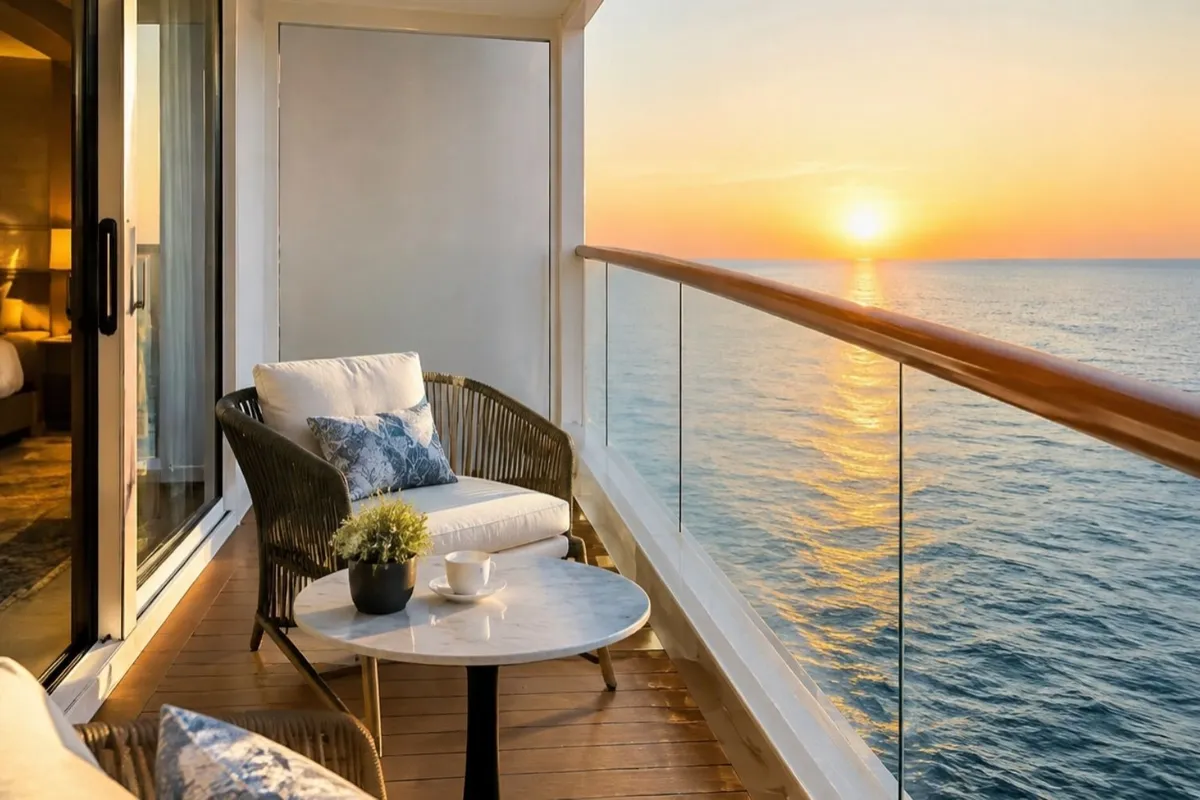
The Emotional Architecture of a Suite
A suite isn’t just another stateroom. It’s an emotional anchor. It’s a sanctuary. It’s a place where your nervous system can settle. It signals safety, calm, and ease. It’s a place to decompress, reconnect, and restore.
You feel the difference immediately. The space is open. The light is soft. The ocean is visible. The air feels calm. The design feels intentional. The atmosphere feels soothing.
Space
Space is the first thing you feel when you walk into a suite. Not just physical space, but emotional space. Standard cabins compress movement. Routines collide. Privacy disappears. Even in a balcony stateroom, the space is tight enough that you’re constantly negotiating around furniture, luggage, and each other.
Suites release that compression.
You walk freely. You sit somewhere other than the bed. You have separation—living room, bedroom, balcony. Your nervous system finally receives the signal: you can rest now.
Suites create family harmony. Kids have space to play. Adults have space to decompress. Everyone has room to breathe. Suites reduce friction. They reduce conflict. They increase connection.
Light
Light is one of the most underestimated elements of cruising. Inside staterooms have none. Balcony staterooms have some, but it’s limited—filtered through a narrow sliding door, often partially blocked by furniture, and rarely expansive enough to create a sense of openness.
Suites transform the experience.
Floor‑to‑ceiling windows flood the room with sunlight. Panoramic views regulate your circadian rhythm. Natural light becomes part of the architecture of calm. You wake gently. You feel oriented. You feel connected to the ocean in a way that’s impossible in smaller rooms.
One Retreat guest described how much she treasured waking every morning to coffee in bed as she looked straight out into the ocean
Calm
Crowded ships create constant sensory load—noise, lines, bottlenecks, bright lights, packed elevators. Even if you love the energy of a big ship, your nervous system absorbs the constant stimulation.
Suite enclaves create quiet zones. Luxury lines reduce passenger density. Dining rooms feel intimate. Lounges feel spacious. Pools feel serene.
A Yacht Club guest shared that he noticed even the smell in the Yacht Club was different from the rest of the ship.
Service
Reactive service requires constant asking, managing, and negotiating. Anticipatory service removes friction
Your butler notices you always linger on the balcony in the morning, but leave half your coffee because it’s not quite hot enough. The next day, without a word, they bring a double‑insulated carafe that stays warm for hours — and place it beside a small dish of raw sugar because you mentioned you prefer it over the packets.
A maître d’ notices you ask for a corner table, the one slightly tucked away in the main dining room. On the third night, he greets you with a soft smile and guides you to “your” table — the quiet one, the one with the perfect view.
On a tender‑port day, the concierge sees you hesitate at the long line forming for the boats. Without you asking, she quietly escorts you to a side entrance reserved for suite guests, where a tender is already waiting. You’re on shore ten minutes later.
Your butler notices the novel on your nightstand and remembers you mention how much you love to curl up in the corner of the sofa each evening. The next day, he places a soft throw blanket and a small reading lamp beside that spot — creating a nook you didn’t know you needed.
Your butler leaves a chilled plate of fruit and a cool towel in your suite — timed perfectly for your return from a long, hot port day.
A suite changes how you experience the day. You wake gently. You get ready without negotiating space. You relax without distraction. You connect without tension. You sleep deeply. You breathe fully.
A suite changes how you experience the ship. You’re not navigating crowds. You’re not waiting in lines. You’re not negotiating for space. You’re simply moving through an environment designed for ease.
A suite changes how you connect with the people you love. You have space to talk. Space to rest. Space to decompress. Space to be together without being on top of each other. Space to be alone without being isolated.
A suite changes how you experience the vacation. You’re not managing logistics. You’re not negotiating upgrades. You’re not debating packages. You’re not signing receipts. You’re simply present.
These moments aren’t accidents. They’re the architecture of luxury.
The Emotional Value of Space
Space has become one of the most coveted forms of luxury—not because it’s rare, but because it’s restorative. Space gives you room to breathe. Room to decompress. Room to reconnect. Room to be together without being crowded. There is a particular kind of joy in having a pool almost entirely to yourself, watching your kids play without having to fight for a lounger or navigate a sea of people. In a world where people are constantly overstimulated, space has become a form of therapy.
Luxury cruise lines understand this deeply. They’re reducing passenger density and designing ships where space isn’t an amenity — it’s a philosophy. Lounges feel intimate. Dining rooms feel calm. Pool decks feel serene. Hallways feel intentionally quiet. Every part of the ship is crafted to create emotional spaciousness, an environment where your nervous system can finally settle.
This shift isn’t just about comfort; it’s about wellness. Space is a psychological need, not a decorative flourish. Suites are being designed with soft lighting, natural materials, and panoramic windows that make the ocean feel like part of the room. The goal isn’t to impress. The goal is to soothe. Crystal Cruises is already leaning into this philosophy. Their suites feel like oceanfront residences, with warm textures, gentle curves, and lighting that shifts throughout the day. It’s not about opulence. It’s about serenity.
The future of luxury cruising is spacious by design. Fewer people means more calm, more ease, more presence. You’re not navigating crowds. You’re not waiting in lines. You’re not negotiating for space. You’re simply moving through an environment intentionally built to feel effortless — a place where space itself becomes part of the experience.
The Emotional Value of Time
Time is becoming another form of luxury. Not just free time, but quality time — time that feels unhurried, unstructured, and unpressured. Time where you’re not rushing from one activity to the next. The emotional freedom that comes when you don’t have to manage all the vacation logistics. The value of the emotional release of not negotiating upgrades or signing receipts, and deciding whether to leave a gratuity. Luxury cruising allows you just to be present.
Additionally, luxury lines are designing itineraries that give travelers more time in port, more time to explore, more time to rest, more time to connect. They’re eliminating decision fatigue by including more in the fare. They’re creating environments where time feels expansive, not compressed.
Time is the new luxury. And luxury cruising is learning how to give it back to people.
The Emotional Value of Service
Service is becoming more human, more intuitive, and more emotionally intelligent. Travelers don’t want to feel fussed over. They want to feel understood. They want service that anticipates instead of reacts. Service that notices instead of asks. Service that feels like care, not performance. I love hearing from guests how wonderful it feels when the crew knows their name. A standard in luxury cruising, almost unheard of on contemporary and premium lines. This is where luxury cruising shines.
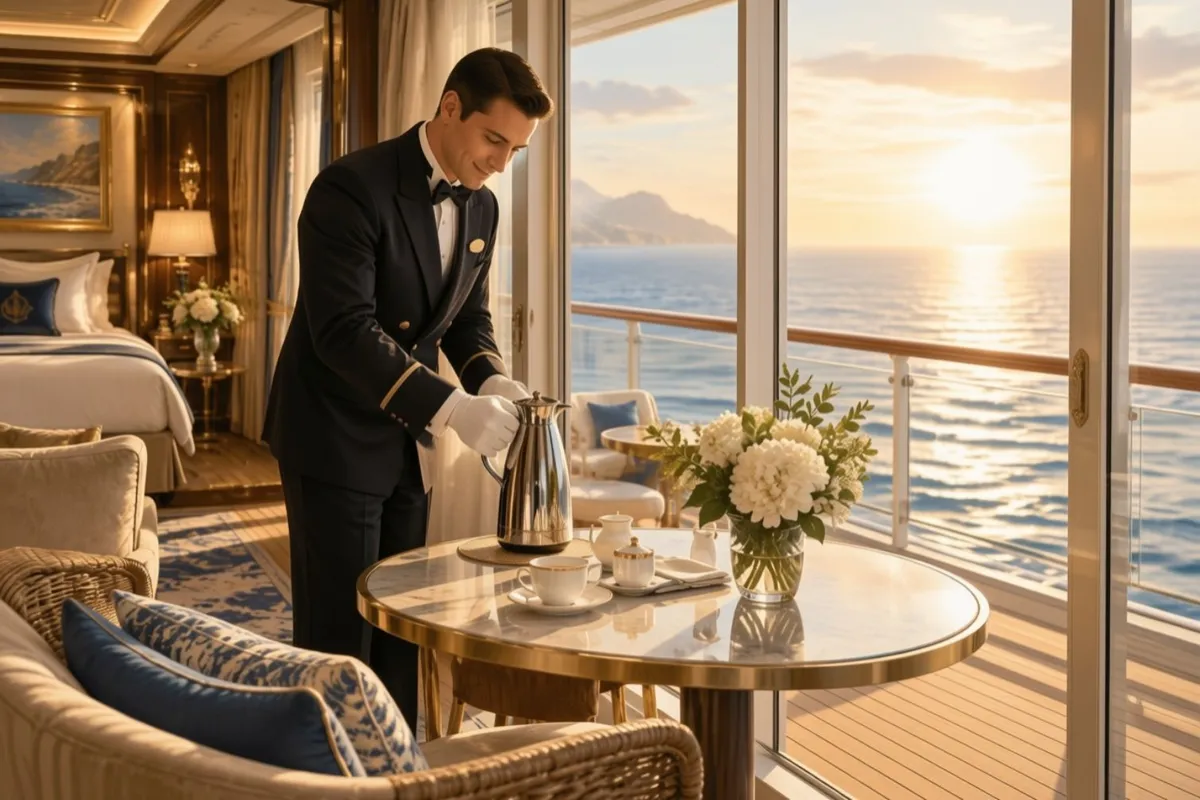
Luxury Cruising is Personal
Personalization has become the quiet engine of luxury cruising — not the algorithmic kind that suggests movies or shopping items, but the human kind that comes from being genuinely noticed. Travelers today aren’t looking for grand gestures. They’re looking for small, meaningful moments of recognition. They want to feel known. They want to feel understood. They want to feel like someone is paying attention.
On luxury ships, personalization isn’t a feature. It’s a philosophy. Crew members learn your rhythms — not because they’re trained to memorize them, but because the environment gives them the time and space to observe. They notice how you take your coffee, where you prefer to sit, whether you linger over breakfast or slip out early for a walk on deck. They adjust quietly, intuitively, without fanfare. It’s the difference between service that responds and service that anticipates. It’s the difference between being taken care of and being cared for.
This kind of personalization changes the emotional texture of a vacation. You can sail the same itinerary on the same ship and look at the same ocean, but the experience feels entirely different when the ship feels attuned to you. The suite doesn’t change the destinations — it changes you. It changes how you move through the day, how you sleep, how you decompress, how you connect with the people you love. It changes how much mental energy you spend managing the vacation instead of experiencing it.
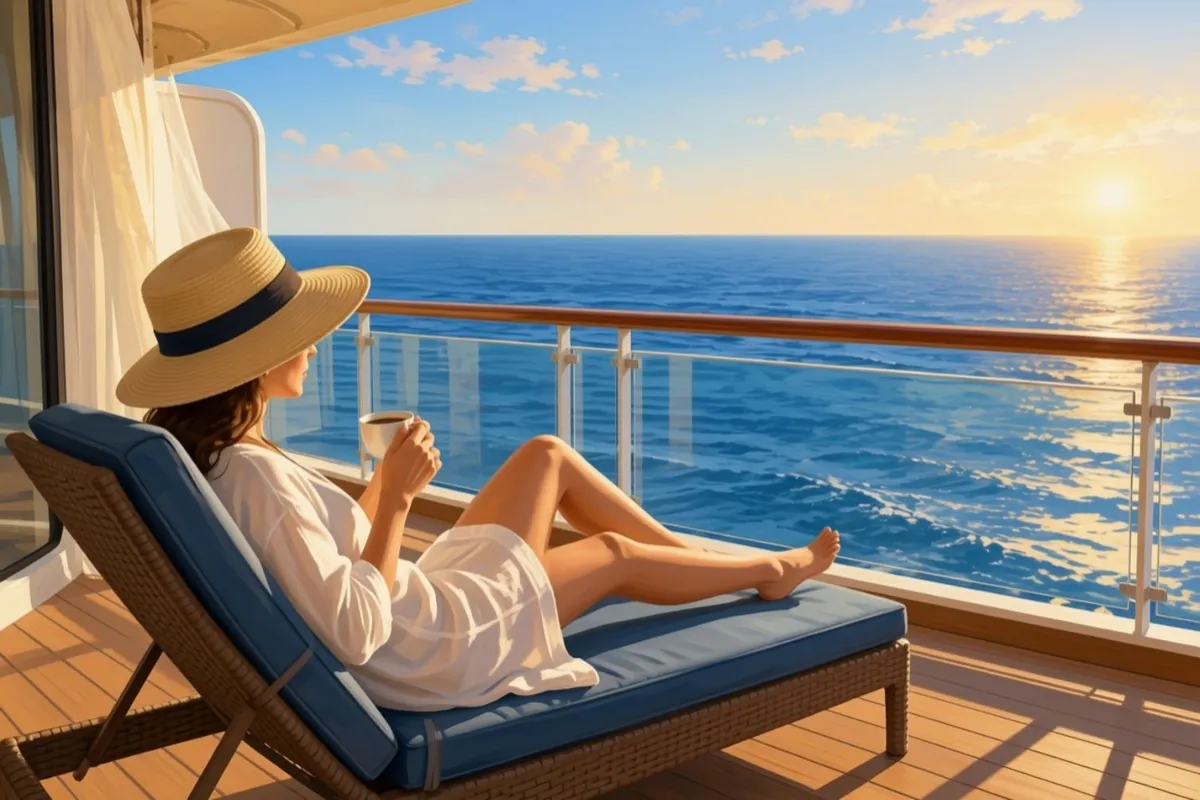
The Future of Luxury Cruising
The future of luxury cruising isn’t being shaped by bigger ships or flashier amenities. It’s being shaped by something quieter, more intentional, and far more human. Travelers today aren’t chasing extravagance for its own sake. They’re not looking for spectacle. They’re looking for ease. They’re looking for calm. They’re looking for connection. They’re looking for a vacation that doesn’t require recovery. And more than anything, they’re looking for experiences that feel meaningful — experiences that stay with them long after the suitcase is unpacked.
We’re living in a moment where people value how something feels more than what something is. The world has shifted. The old markers of luxury — opulence, excess, grandiosity — have given way to something more grounded. People aren’t collecting things. They’re collecting moments. They’re choosing memories over merchandise, presence over possessions, and emotional resonance over physical souvenirs. Luxury cruising is evolving in response to that shift, moving toward a deeper understanding of how people want to feel on vacation.
That evolution is reshaping everything — from service to design to dining to itineraries. It’s not about extravagance. It’s about emotional architecture. It’s about crafting an environment where the experience itself becomes the luxury.
The Rise of Experiential Luxury
Travelers today want experiences that feel personal, immersive, and emotionally meaningful. They want to feel connected to the places they visit, not just pass through them. They want to savor moments, not accumulate items. They want to return home with stories, not shopping bags.
Luxury cruise lines are responding by designing itineraries that linger instead of rush. Overnight stays. Late departures. Small‑group cultural encounters. Chef‑led market tours. Wellness retreats at sea. Partnerships with artisans and local communities. These experiences aren’t about checking boxes. They’re about creating memories that feel textured, layered, and deeply human.
Azamara’s destination immersion philosophy is a perfect example. Their ships stay late. They stay overnight. They encourage exploration. They create space for travelers to feel the heartbeat of a place. Oceania’s culinary tours offer a taste of local culture. Silversea’s expedition cruises blend adventure with education. Viking’s curated excursions offer depth, not just breadth. Explora Journeys integrates all three, wellness, culture, and connection into every itinerary.
The Shift Toward Spacious, Restorative Luxury
For decades, luxury travel was defined by ornate physical structures — marble bathrooms, sweeping staircases, heavy fabrics, gilded accents, and chandeliers designed to make you gasp. But today’s travelers want something different. They want simplicity. They want serenity. They want design that feels intentional rather than ostentatious. They want spaces that restore rather than overwhelm.
Luxury cruise lines have embraced this shift. Suites are being designed with natural materials, soft lighting, and panoramic windows that make the ocean feel like part of the room. The goal isn’t to dazzle the senses. The goal is to soothe them. It’s about creating an environment where your nervous system can settle, where the space itself becomes part of the experience.
Explora Journeys is leading the way. Their suites feel like a seaside resort— warm, airy, and deeply calming. The design is modern but not cold, elegant but not flashy, luxurious but not loud. It’s a new kind of luxury, one that prioritizes wellbeing over opulence.
This evolution isn’t just aesthetic — it’s emotional. Space has become a form of wellness. In a world where people are constantly overstimulated, spaciousness is no longer a decorative flourish; it’s a psychological need. Luxury ships are reducing passenger density and designing environments where calm is the default. Dining rooms feel intimate. Lounges feel open. Pools feel peaceful. Hallways feel intentionally quiet. You’re not navigating crowds or waiting in lines. You’re not negotiating for space. You’re simply moving through an environment built to feel effortless.
The future of luxury cruising is spacious by design. It’s not about having more square footage for the sake of it. It’s about creating emotional spaciousness — room to breathe, room to decompress, room to reconnect, room to be together without being crowded. It’s about crafting a ship where space itself becomes a form of care.
The Future Is Calm
Calm is becoming a design principle. Luxury ships and suite lounges allow travelers to move away from bright lights, loud music, and constant stimulation. Instead, they find quiet lounges, soft color palettes, and spaces that encourage relaxation. The goal is to create an atmosphere that heals your nervous system rather than drain it.
In these spaces even the hallways feel different. They’re quieter. Softer. More intentional. You feel the calm in the way people move, in the way staff speaks, or does not speak, and in the way the ship breathes.
Calm is also integrated into the dining experience. Restaurants are designed for conversation, not spectacle. No shows, announcements or conga lines. The lighting is warm, and the music is subtle. You’re not navigating crowds. Service is unhurried. You’re not rushed through courses. You’re not competing for attention. Your server looks for you, not the other way around. You’re simply enjoying a meal in a space designed for presence.
The Future Is Inclusive
Inclusion is becoming a cornerstone of luxury cruising. Not inclusion in the sense of accessibility—though that’s improving—but inclusion in the sense of financial clarity. Travelers want simplicity. They want transparency. They want to stop thinking about receipts.
Luxury lines are responding by expanding their all‑inclusive models. More excursions. More dining options. More amenities. More experiences. The goal is to eliminate decision fatigue. You’re not constantly deciding, signing, negotiating. You’re simply present.
One Regent guest said, “I felt present in a way I haven’t on other cruises.” That’s the power of inclusion. It frees your mind. It frees your energy. It frees your attention.
The Future Is Sustainable
Sustainability is becoming a defining feature of luxury cruising. Travelers increasingly want indulgence that doesn’t come at the planet’s expense. Cruise lines are responding with LNG-powered ships, advanced wastewater systems, sustainable materials, zero-waste culinary programs, and carbon-neutral itineraries.
Explora Journeys is incorporating sustainable materials into their suite design. Oceania is expanding its plant-forward dining options. Silversea is investing in cleaner fuel technologies. Regent is reducing single-use plastics. Azamara is partnering with local communities to create sustainable excursions.
Sustainability isn’t just a trend. It’s becoming part of the identity of luxury cruising.
The Future Is Experiential
Luxury cruising is moving beyond the idea of simply “seeing” a destination. Travelers today want to feel something. They want experiences that are textured, layered, and emotionally resonant. They want to step into a place rather than pass by it. They want to return home with a deeper sense of connection — not just a collection of photos.
This shift toward experiential luxury reflects a broader cultural movement. People are valuing moments over merchandise, meaning over material, immersion over accumulation. They’re choosing experiences that stay with them long after the trip ends, experiences that feel personal rather than packaged.
Cruise lines are responding by reimagining what it means to explore the world. Instead of rushing through ports, itineraries are slowing down. Ships linger longer. Evenings stretch into nights. Travelers have time to wander, to savor, to discover. Experiences are becoming more intimate, more curated, more rooted in the culture of the places visited.
You see it in the way excursions are evolving. Guests might spend a morning with a local baker learning the craft behind a regional pastry, or join a naturalist for a quiet hike at sunrise, or sit with a musician who explains the history behind a traditional instrument before playing it. These aren’t mass‑market tours. They’re small, intentional encounters designed to create connection.
Wellness is becoming part of the experiential landscape too. Not spa treatments — but deeper forms of restoration. Sunrise meditation on deck. Movement classes inspired by local traditions. Culinary workshops that explore nourishment rather than indulgence. Journeys that integrate the destination into the experience of wellbeing.
Even onboard, the shift is unmistakable. Enrichment programs are no longer generic lectures. They’re conversations with historians, chefs, artists, and explorers —people who bring context and meaning to the places you’re visiting. The ship becomes part of the learning, part of the immersion, part of the story.
Experiential luxury isn’t about doing more. It’s about doing what matters. It’s about creating moments that feel personal, memorable, and emotionally grounding. It’s about designing travel that stays with you — not because it was extravagant, but because it was meaningful.
Experiential travel is becoming the new luxury. Not because it’s trendy, but because it reflects what people truly crave now: connection, authenticity, and the feeling of being part of something rather than simply observing it.
The Future Is Human
For all the innovation ahead, the heart of luxury cruising will always be human. The quiet sundeck when the main pool is packed. The butler who remembers your preferred bath oils when they start filling the tub. The bartender who introduced you to your new favorite drink and always has it ready. The balcony where you drink the coffee delivered exactly on time.
These moments aren’t accidents. They’re the architecture of luxury.
Luxury cruising isn’t about being fancy. It’s about being well. It’s about creating an environment where you can rest, breathe, connect, and be present. It’s about designing a vacation that feels restorative, not exhausting. It’s about crafting an experience that feels effortless, indulgent, and unforgettable.

Conclusion — A Future Built on Ease, Calm, and Connection
Luxury cruising isn’t about being fancy. It’s about being well. It’s about creating an environment where your nervous system can settle, where your routines feel effortless, where your presence feels supported rather than stretched. It’s about designing a vacation that restores instead of depletes — one that feels spacious, calm, and deeply human.
As the future unfolds, personalization will become even more refined. Not louder, not flashier, but quieter and more intuitive. Wellness‑driven design, sustainable practices, and immersive travel will continue to shape the experience, but personalization will remain the thread that ties it all together. It’s what transforms a suite from a room into a sanctuary. It’s what turns a ship into a place that feels like it was built for you.
A personalized cruise is a vacation where you feel cared for, not processed. Where you feel seen, not overlooked. Where you feel restored, not depleted. Where you feel connected — to the ocean, to your people, and to yourself.
This is the true value of a suite.
This is the future of luxury cruising.
And this is the experience you deserve.