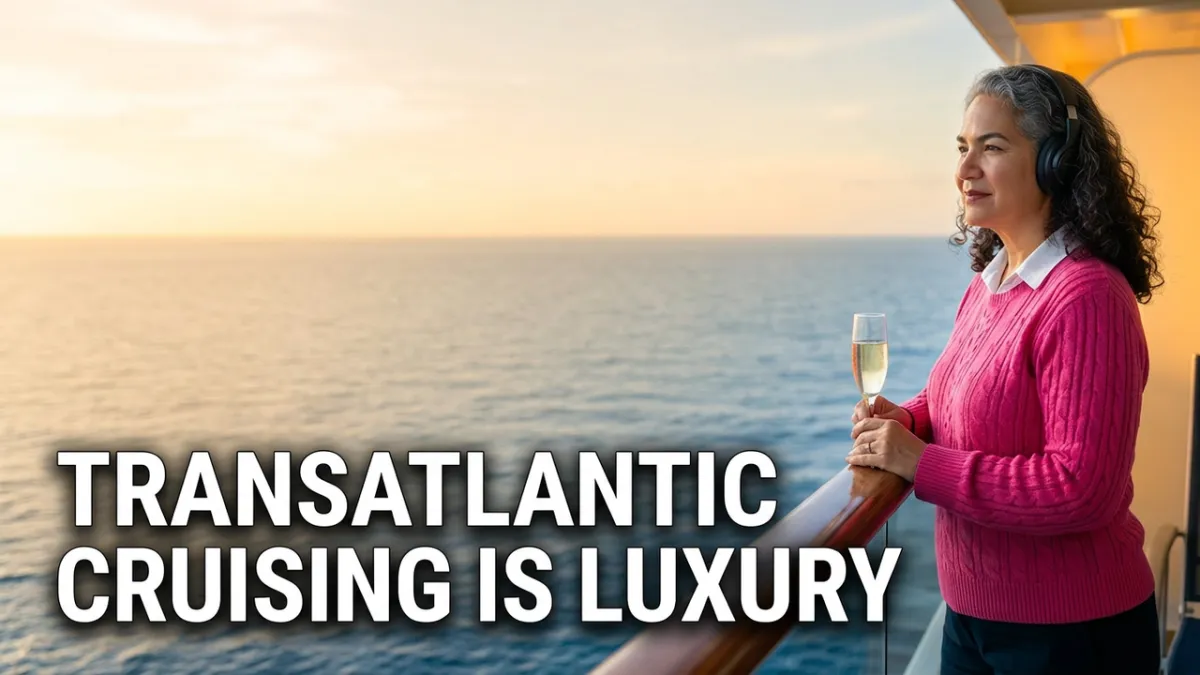
Transatlantic Cruise: Why Slow Cruising Is the Real Luxury
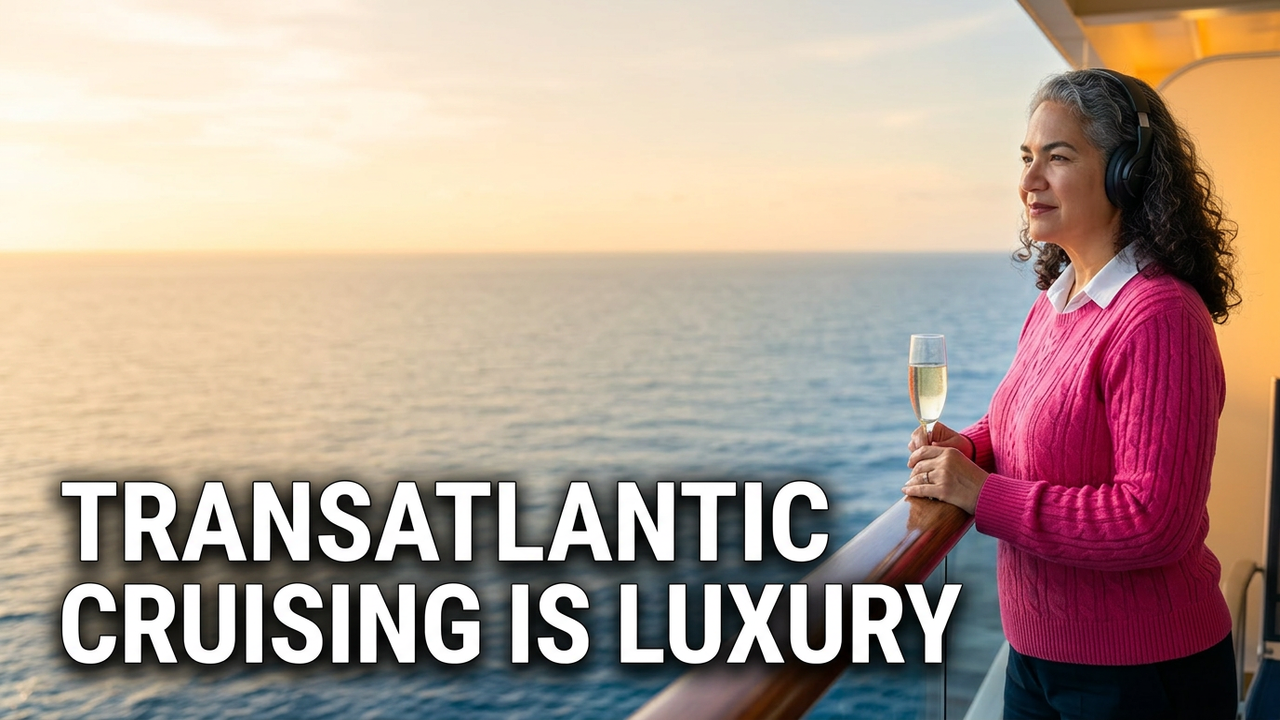
Table of Contents
What Makes a Transatlantic Cruise Different
A transatlantic cruise — sometimes called a "slow cruise" or "repositioning cruise" — moves a ship between continents over 12 to 16 days, with the bulk of that time spent at sea. Cindy Pirtle has done four: three on Royal Caribbean (Voyager, Independence, and Harmony of the Seas) and one on Carnival Glory. Unlike a packed seven-night Caribbean sailing, the rhythm is built around sea days, slow time-zone shifts (one hour a day instead of seven at a stretch), and a community of cruisers who, by definition, aren’t in a hurry.
Five Reasons to Book a Transatlantic Cruise
Lower per-night cost. Because the cruise lines need to reposition ships seasonally, transatlantic fares are often significantly cheaper per night than peak Caribbean or Mediterranean sailings — sometimes dramatically so, even during traditional peak weeks like spring break.
Skip the airport. No long-haul flights, no security lines, no jet lag from a ten-hour time jump. You arrive in Europe rested and on local time.
Real time to know your fellow travelers. Cindy found "her people" — fellow crocheters and knitters — and met daily at 10 a.m. for the entire crossing. That kind of community doesn’t form on a five-night cruise where everyone is racing to excursions.
A predictable, restorative routine. Trivia, lectures, crafts, and meals fall on a reliable schedule. Coffee in the morning, the sound of the waves, no errands, no cooking, no bills.
Access to unusual ports. Transatlantic itineraries often stop at places you can’t easily reach otherwise — the Azores, Gibraltar, Bermuda — turning the crossing itself into a destination.
Listen to This Episode
Prefer to listen? Tune into this week’s Luxury Cruising podcast for the full conversation with Cindy Pirtle — travel agent, three-career retiree, and veteran of 95 cruises (including four transatlantics) — on why the open ocean is the most underrated luxury in cruising. Play the episode →
The Best Transatlantic Cruise Lines (and How to Pick One)
Cindy frames the cruise market in tiers, which makes picking a transatlantic line easier:
Family/value lines — Carnival, Royal Caribbean, NCL, MSC. The most affordable transatlantic options, with enough kids on board (often homeschoolers using the crossing as travel-based education) that families don’t feel alone.
Premium lines — Princess, Celebrity, Holland America, Disney, Virgin Voyages. Fewer children, more refined service, often surprisingly competitive transatlantic pricing during shoulder seasons.
Luxury lines — Silversea, Regent Seven Seas, Viking Ocean, Seabourn. Essentially child-free, all-inclusive, and built around the slow-travel ethos that transatlantic cruising already embodies.
Ocean liners — Cunard. The Queen Mary 2 is the only true ocean liner still running weekly Southampton-to-New-York crossings in seven days. It’s a different category entirely: closer to a classic river cruise feel than a modern megaship, and a great option for non-spring/fall crossings.
When to Book: Transatlantic Cruise Seasonality
Transatlantic sailings are inherently seasonal because they exist to move ships. Westbound-to-Europe crossings cluster in March and April. Eastbound-to-the-Caribbean crossings cluster in October and November. Ships also reposition to Alaska in May and back south in September, and many lines now reposition between Vancouver/Seattle and Asia or Australia in the fall — a Transpacific cousin of the Atlantic crossing, often via Hawaii, Fiji, Bora Bora, or Easter Island.
Off-season transatlantic options exist (Cindy caught a March crossing on Carnival Glory after a dry-dock period), but they require a travel agent watching the schedules. The most reliable strategy: book a westbound crossing in spring, spend time on the ground in Europe, and book an eastbound return in fall — exactly the structure Cindy built into her recent 40-day trip.
The Real Luxury of a Transatlantic Cruise
A 16-day transatlantic cruise in a suite often costs less than a first-class flight across the same ocean. But the deeper luxury, in Cindy’s framing, isn’t the cabin category — it’s time. Time to do nothing, time to meet people, time to take a side trip for genealogy research in Alsace-Lorraine, time to do the Sound of Music tour in Salzburg because suddenly you’re close enough. A transatlantic cruise gives you the structural excuse to realize the dreams you’d otherwise never plan a separate trip around.
Bottom Line: Why a Transatlantic Cruise Is the Most Underrated Luxury at Sea
At the end of the day, a transatlantic cruise isn’t about getting from Point A to Point B. It’s about reclaiming something modern life rarely gives us: unstructured time, deep rest, and the space to follow your curiosity wherever it leads. Whether you’re knitting with new friends at 10 a.m., watching the horizon shift one hour at a time, or stepping off the ship in a port you never expected to see, a crossing gives you permission to slow down in a way no flight ever could.
For travelers who crave meaning over motion, connection over crowds, and the luxury of days that unfold gently instead of urgently, a transatlantic cruise delivers an experience that stays with you long after you’re back on land.
If you want to hear the full story — including Cindy’s best tips, favorite moments, and why she believes the open ocean is the most overlooked luxury in cruising — listen to this week’s episode of Luxury Cruising.


